
❋
Creative Strategy for Nabi Health
Nabi Health“Food Noise” Angle Drove 100% of Nabi’s Booked Visits at 37% Lower Cost Per Lead
❋ Project ContextNabi Health provides virtual registered dietitian care for people struggling with disordered eating and their relationship with food. When they came to us, their patient audience wasn’t clearly defined. Our work focused on building and testing narratives that validated their client’s experiences, avoiding diet‑culture language, and proving which stories could ethically and sustainably convert into booked, insurance‑covered visits.
❋ My RoleI led the creative strategy for this test, developed the two core angles, wrote and shaped the messaging for both, and directed the creative execution so each concept matched the emotional reality of its audience while remaining measurable at the booked-visit level.
Cut Cost Per Scheduled Consultation by 30%
〰️
Cut Cost Per Scheduled Consultation by 30% 〰️
Nabi HealthThe Challenge
Nabi provides virtual care for people navigating eating disorders and disordered eating, pairing therapy with clinical dietitians to help patients rebuild a safer, more compassionate relationship with food. The marketing team needed to grow sustainably without leaning on the familiar tropes of diet culture, transformation narratives, or body‑centric promises that can actively harm the very people they serve.
Their existing paid social and UGC leaned on broad mental‑health or wellness messaging, which made it difficult to clearly explain what Nabi offers and why it’s different from generic therapy apps, weight‑loss programs, or nutrition coaching. Prospective patients were often confused about whether Nabi was truly equipped to address eating disorders, whether care would feel safe and non‑judgmental, and how the process actually worked from first contact to ongoing support.
On top of that, the team had to navigate sensitive clinical and ethical considerations: language, visuals, and stories needed to avoid triggering content, numbers, and frames that reinforce restriction, “success” metrics, or appearance‑based validation. They needed a creative strategy that could shape compliance‑aware UGC, define patient‑centered themes and narratives, and systematically test paid social angles and formats that prioritized psychological safety, trust, and clarity while still driving measurable growth.

Nabi HealthApproach
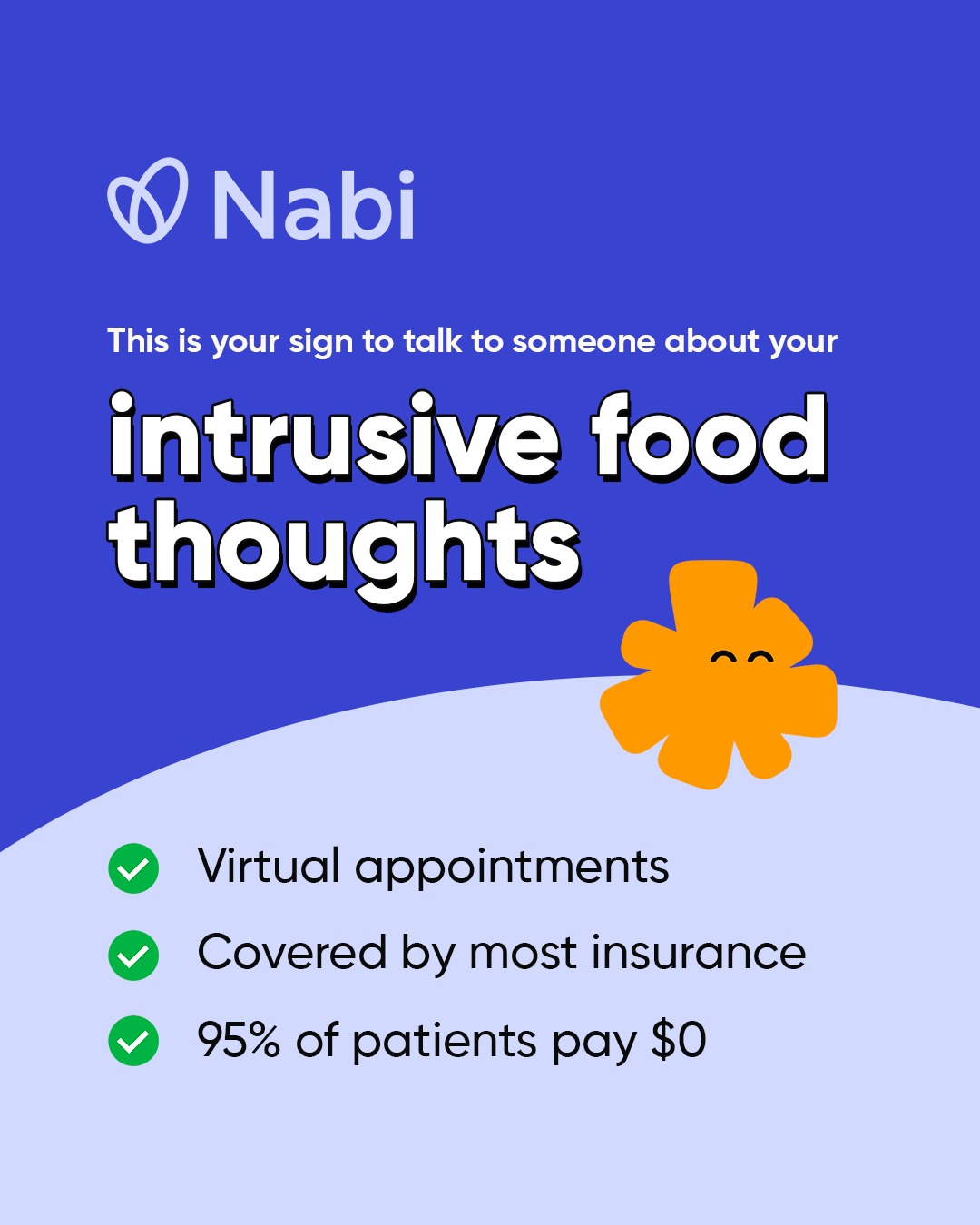
Designing a distinct top-of-funnel angle to drive awareness, the campaign centered on a single TOF concept aimed at millennial women:❋ Food Noise: A branded animated explainer using Nabi’s mascot character, built around the confessional experience of your brain running a constant background tab on food: calculating, tracking, negotiating, even during unrelated moments in the day.The angle was constructed to feel like the audience’s own inner monologue: the private, persistent “food noise” that many people experience but rarely name.
Matching narrative style to audience insight Food Noise used first-person, relatable framing that put the viewer right inside the constant mental chatter around food. It treated the issue as an invisible but exhausting background process that many people recognize immediately.Measuring beyond the click: Rather than judging success at click-through alone, success was defined around full-funnel tracking. The “Food Noise” angle pulled strong CTR, but the real impact showed up further down the funnel: it generated every scheduled appointment in the test, validating that naming and visualizing “food noise” resonated deeply enough to drive booked visitsA snapshot of top performers, representing the creative formats or messaging that is consistently driving results.